1. Tư vấn khởi kiện thu hồi nợ https://www.htc-law.com/tu-van-phap-luat-dan-su/di...
2. Tư vấn thu hồi nợ khi bên vay không có khả năng trả nợ https://www.htc-law.com/civil-law/luat-su-tu-van-b...
3. Dịch vụ pháp lý khởi kiện đòi nợ https://www.htc-law.com/dich-vu-phap-ly-khac/dich-...
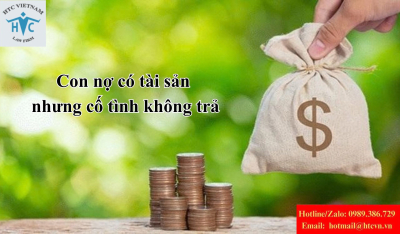
In the practice of debt recovery, there are many cases where borrowers still have houses, land, cars, money in accounts or other valuable assets but deliberately delay and do not fulfill their debt repayment obligations. More worryingly, when knowing that the creditor is about to sue, the debtor may try to transfer, donate or move the property to make it difficult to recover the debt later. So when the debtor has assets but deliberately does not pay, how does the creditor need to file a lawsuit and can ask the Court to apply measures to prevent the dispersal of assets?

Lending money but not making a loan is a fairly common situation, especially among friends, relatives, acquaintances or parties with business relationships. When the borrower fails to pay, the lender is often concerned that without a contract or loan paper, it will not be possible to prove the debt to demand payment. However, in reality, a loan is not necessarily justified only by a loan paper. Transfer statements, Zalo messages and other electronic data can become important sources of evidence if they show the delivery of money, the purpose of the loan and the repayment obligation of the borrower. The current Civil Procedure Code also recognizes electronic data as one of the sources of evidence used to prove in civil cases. So if you have a transfer statement and Zalo message but do not have a loan paper, can you sue for money? How to prepare evidence and what can be done to increase the ability to protect the interests of the borrower when the borrower denies the debt?

Verbal lending of money, transferring money through accounts or just agreeing with each other without making a loan is a fairly common situation in transactions between relatives, friends, partners or acquaintances. When the borrower fails to pay the money on time, the lender often faces difficulties because there is no contract or loan document to directly prove the debt. However, the absence of a loan does not mean that the lender loses the right to sue or cannot reclaim the property. The important issue is what evidence the lender can provide to prove the delivery of the money, the purpose of the loan, the loan amount, the repayment term, and the debt repayment obligation of the borrower.

In fact, it is quite common to lend money in cash to relatives, friends, partners or acquaintances. Because of trusting each other, many people deliver money without making a loan contract, without asking to sign a receipt of money and without witnesses. It is only when the borrower fails to pay or denies that he has received the money that the lender finds himself in trouble and wonders whether a cash loan without witnesses can be accepted by the Court. In fact, a cash loan without witnesses does not mean that the lender will definitely lose the right to sue. However, the most important issue in these cases is the ability to prove the delivery of funds and the existence of a property loan relationship. The plaintiff needs to have appropriate documents and evidence to prove that his or her request is grounded and lawful.

In the context of expanding trade activities, many Vietnamese enterprises sign contracts for the purchase and sale of goods, provide services or cooperate with foreign partners. However, besides development opportunities, cross-border transactions also have potential debt risks. Many businesses fall into the situation of having delivered goods, completed services or fully fulfilled their obligations but foreign partners are late in payment, prolonging the debt repayment period or refusing to perform their obligations. Unlike debt collection between domestic enterprises, debt collection from foreign partners is often more complicated due to the involvement of foreign factors, applicable laws, dispute settlement jurisdiction, language, location of assets, and the ability to enforce decisions after the dispute is resolved. So when a foreign partner owes money, what do Vietnamese businesses need to do to protect their interests and choose an effective debt recovery plan?
Trang 1/1


 Tiếng Việt